

 Emissions
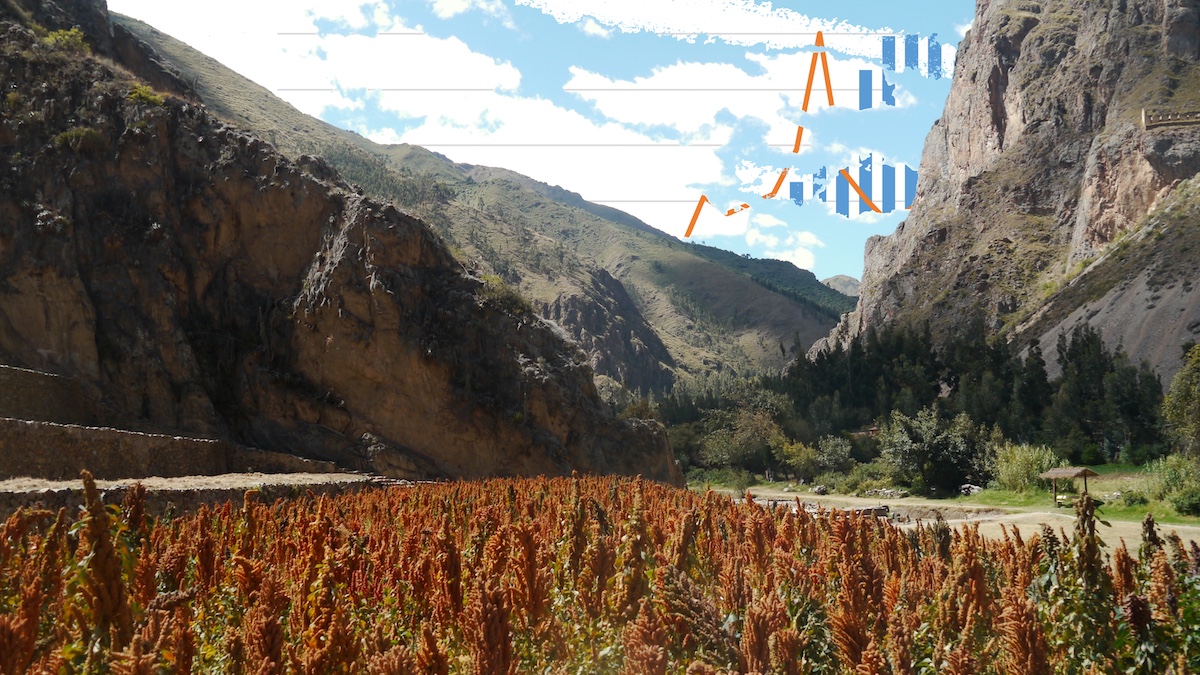
 Emma McDonnellFor most of the 2000s, farmers in Peru earned a little more than one sol per kilogram of unprocessed quinoa they sold. Starting around 2007, the price began to climb as quinoa exports became a thing, averaging 9 soles per kg in 2014. The following year, the price halved, and it dropped again in 2016. It’s still around 4 soles per kg, so a lot better than it was, and quinoa production is double what it was. Nevertheless, the early promise of a sustained quinoa boom proved to be an illusion.
Emma McDonnell was in Peru for the early years of the boom and for the subsequent bust, a story she recounts in her book The Quinoa Bust.
Notes
- Emma McDonnell has a website. Her book The Quinoa Bust: The Making and Unmaking of an Andean Miracle Crop is published by California University Press.
- A previous episode — It is OK to eat quinoa — looked at the impact of the boom in purely economic terms.
- An issue of the USDA’s Choices magazine looked at several so-called functional foods, including quinoa, asking whether they were a Fad or Path to Prosperity?. Both, maybe.
- Here is the transcript
- The banner photo uses a picture of quinoa growing in Ollantaytambo, Peru by Hector Montero. The quinoa close up on the cover is by Flickered!
